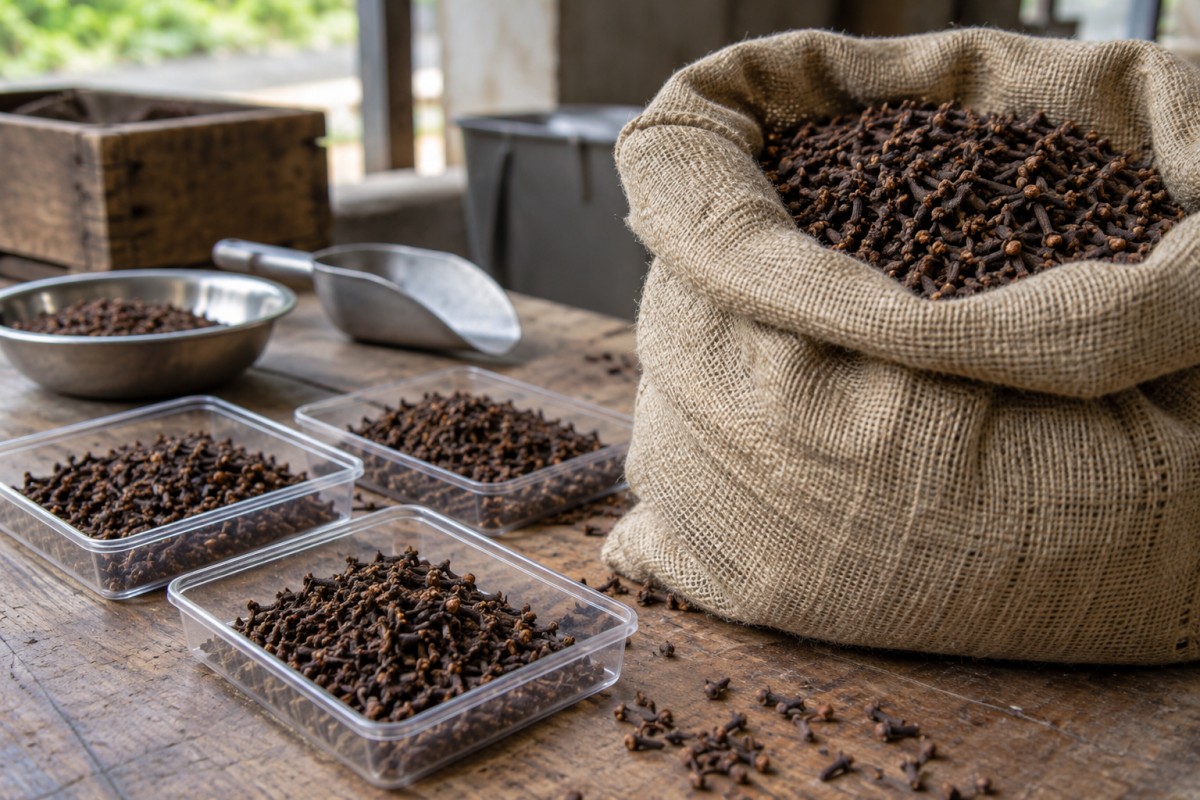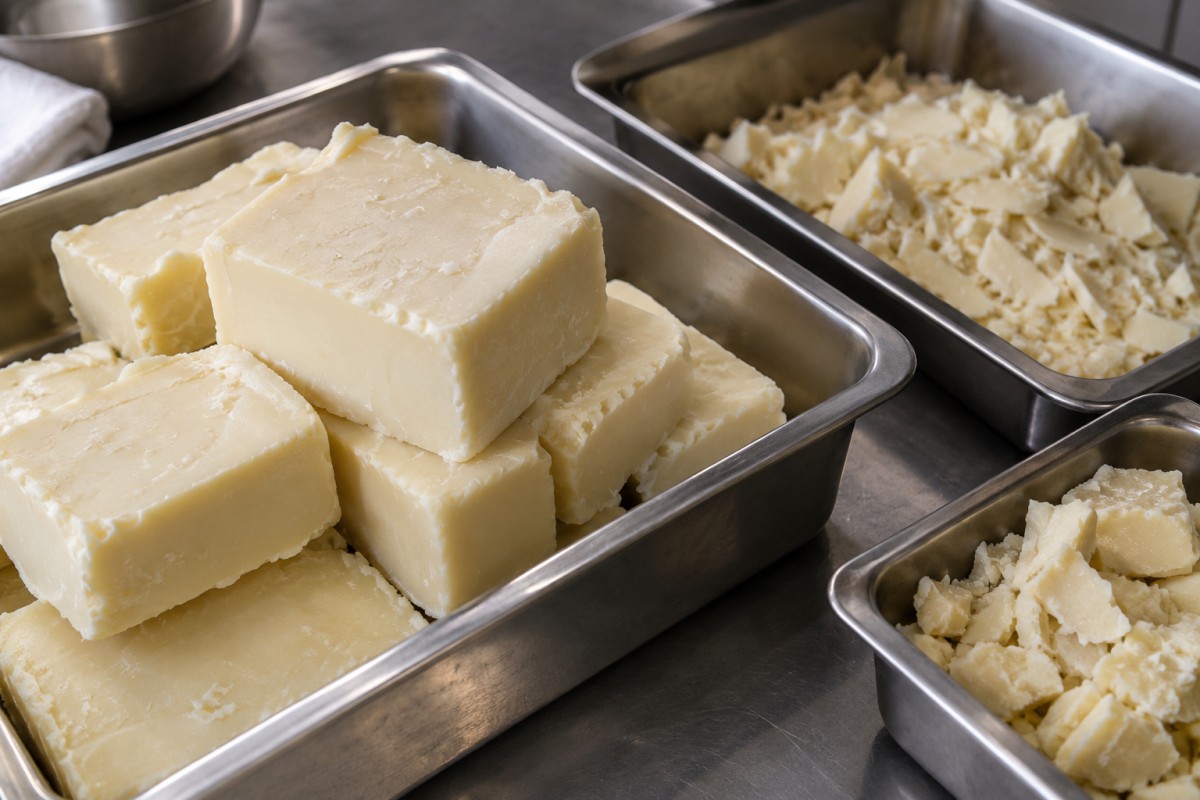
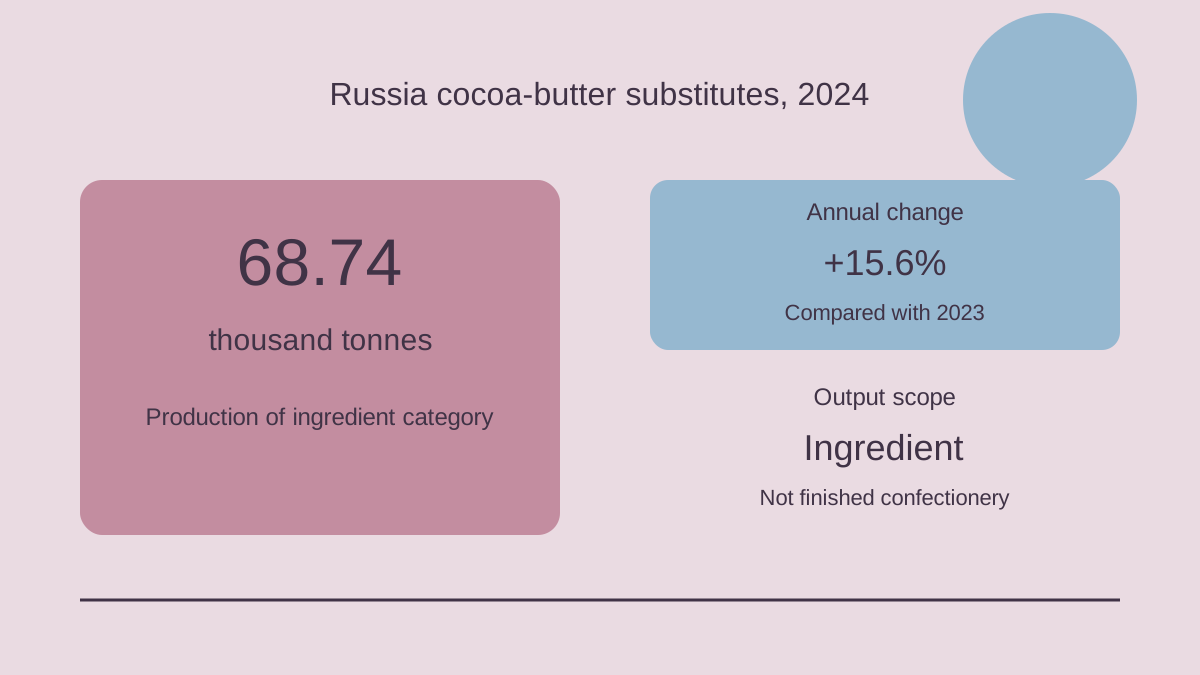
Interfax reported on September 18, 2025, citing OleoScope, that production of cocoa-butter substitutes in Russia reached 68.74 thousand tonnes in 2024, up 15.6% from 2023. The underlying analytical publication reports the same 2024 amount. The figure describes an ingredient category; it is not a measurement of finished confectionery output.
The original accounting analysis below examines that distinction. Every numerical composition is invented and represents no actual recipe, manufacturing process or industry conversion factor. The examples assume consistent mass units and explicitly stated incorporation conditions. They establish no ingredient compatibility, product quality, legal naming rule or health outcome. Their purpose is narrower: to show which additional information is needed before an ingredient total can be interpreted as the mass of finished products.
The measured object comes before the growth percentage
A percentage change belongs to the object that was measured. Growth in production of an ingredient category describes that category, over the period and within the coverage used for the estimate. Moving the percentage to finished goods would change the object of the claim. The multiplication is not the main problem; the missing relationship between the two objects is. That relationship needs evidence rather than an assumption that every tonne represents the same finished output.
The source's publication year and observation year also differ. This is a report published in 2025 about production in 2024. Keeping both dates visible prevents the reported amount from becoming an estimate of 2025 output through an abbreviated caption. A historical report can discuss the earlier observation without silently updating its period. The analytical examples are separate again: they explain a measurement relationship and do not extend the historical production series.
For a reader, a useful first sentence can therefore name the ingredient, the mass unit, the observation period and the organisation to which the estimate is attributed. A second sentence can identify what the number does not measure. This is a proposed way to preserve scope, not a claim about the statistical methods behind the estimate. A precise label lets the original number remain useful without making it answer a different production question.
An ingredient fraction changes the implied finished mass
Consider a deliberately abstract composition in which one counted ingredient constitutes 20% of the finished mass. Suppose ten mass units of that ingredient are fully incorporated, with no losses or other changes within the model. The implied finished mass is ten divided by 0.20, or 50 mass units. Now choose another invented composition in which the ingredient constitutes 50%. The same ten incorporated units imply 20 finished units instead.
The two examples use the same ingredient mass but produce different calculated totals because the assumed fraction differs. They are not recommendations for using a cocoa-butter substitute at either percentage. No actual confectionery recipe is being described. The fractions are simply selected numbers that expose the denominator. Without a corresponding composition, an ingredient mass does not determine a unique finished-product mass, even in this simplified model with complete incorporation.
The direction of the relationship also deserves attention. Under the model's assumptions, a smaller ingredient fraction means that each finished unit contains less of the counted ingredient. A fixed incorporated amount can therefore correspond to a larger finished total. That is an arithmetic consequence of the chosen fraction, not evidence of greater production capacity or a commercially feasible formulation. The calculation answers a mass question only after its hypothetical conditions have been accepted.
Available, used and incorporated are different quantities
The previous example began with an amount fully incorporated into finished products. A production report about the ingredient begins somewhere else: it counts the ingredient's own production. The announcement alone does not identify how much of that production was incorporated into a matching set of finished products during the same period. Moving directly from the reported ingredient output to the example's incorporated amount would skip an observation boundary that has not been supplied.
An invented accounting record could distinguish ingredient produced, ingredient available to a particular manufacturer, ingredient issued to a process and ingredient incorporated into the chosen finished output. Those labels describe different boundaries. The example does not claim that real records necessarily use those labels or that any particular quantity was lost or stored. It simply makes explicit the quantity required by the division before applying a composition fraction.
If ten ingredient units are produced but only eight are assumed to enter the model's finished output, the 20% composition would imply 40 finished units, not 50. That change follows from a different incorporated amount. The illustration establishes no actual incorporation share. It shows why a correct composition cannot compensate for using an input quantity measured at the wrong boundary. Both the numerator and the denominator need to describe the same set of products.
A product mixture needs mass weights
A single composition fraction can be insufficient when the finished total contains several product groups. Consider two invented groups, each contributing 50 finished mass units. The first contains the counted ingredient at 20%, and the second at 40%. They incorporate ten and 20 ingredient units, respectively. Together they contribute 100 finished units and 30 incorporated ingredient units, giving a mass-weighted ingredient fraction of 30% across this particular mixture.
The simple average of 20% and 40% also happens to equal 30% here because the finished masses are equal. That coincidence should not become a general rule. Suppose the first group contributes 80 finished units and the second contributes 20, with the same fractions. The ingredient amounts become 16 and eight, or 24 in total. The combined fraction is now 24%, despite the two recipe fractions remaining 20% and 40%.
Giving each product name an equal weight would still produce a 30% average and would misdescribe the 80-to-20 mixture. The relevant weights are finished masses within the calculation, not the number of names on a product list. These invented groups identify no actual range. They demonstrate how a portfolio's composition can change the link between ingredient mass and finished mass without changing either group's assumed individual fraction.
A change in the mixture can change ingredient demand
The two hypothetical mixtures each total 100 finished mass units. One incorporates 30 ingredient units; the other incorporates 24. The difference in ingredient use does not require a change in the total finished mass. It follows from changing the shares of the two groups. A reader who sees an ingredient total alone cannot identify which combination of finished volumes and composition shares produced it.
The converse is equally important. A rise in incorporated ingredient mass could accompany a larger finished total, a shift toward groups with a higher ingredient fraction or some combination of both. The aggregate ingredient number does not choose among those explanations. This is not an assertion that the reported market experienced a particular shift. It is an original explanation of why the input-to-output relationship remains underdetermined without the relevant product mixture.
Therefore, a finished-production growth estimate cannot be recovered merely by repeating the ingredient's growth percentage. Even when every ingredient unit is assumed to be incorporated, the relationship depends on the composition of both comparison periods. If that composition is unknown, the calculated finished trend is unknown under the model. Assigning a constant fraction without evidence would turn an assumption into an apparently observed industry result.
Product counts and product mass need separate labels
A count of finished items adds another unit to the discussion. Ten finished mass units could be divided into different numbers of items depending on the assumed item mass. In an invented example, dividing ten mass units into items weighing one unit gives ten items; dividing the same mass into items weighing half a unit gives 20. The ingredient calculation alone does not tell the reader which arrangement applies.
The distinction matters when a text moves between tonnes, packs and product names. A pack count is not a finished mass until a matching content mass has been established. A product-name count is not a volume weight until the corresponding output is known. The model does not supply packaging sizes or actual product dimensions. It keeps the different units visible so that the same number cannot acquire several meanings as the paragraph develops.
A comparison could retain a consistent mass basis throughout and discuss item counts separately. If the report contains both, it can explain the bridge between them rather than rely on an implied standard item. No universal item size follows from an ingredient category's name. A clear accounting explanation therefore avoids translating an ingredient increase into additional bars, packs or servings unless the necessary product-specific information is available.
Aggregation can conceal unlike coverage
A category total can combine observations without establishing that every component serves the same finished-product group. Before interpreting it through one composition fraction, a reader needs to know whether the counted category matches the ingredient included in that fraction. This article does not assess the technical properties of cocoa-butter substitutes or establish interchangeability between products. It treats category coverage as a measurement question rather than as permission to substitute one material for another.
Likewise, a geographic production total and a manufacturer's incorporated amount are different scopes. The first cannot automatically become the second through a change of label. A calculation about one manufacturer or one product group would need its own matching quantity. The aggregate can provide context while remaining an aggregate. It need not be forced into a local formula simply because that formula is easy to demonstrate.
The scope also includes the period. Ingredient produced in one observation window and finished products recorded in another need not represent the same set of incorporation events. This is not a claim about actual storage or shipment timing in the reported market. It identifies the additional matching requirement. A plausible fraction and a plausible mass do not create a valid conversion if they refer to different objects or intervals.
Conditional calculations should remain conditional
A scenario can show what would follow from a specified incorporated amount and a specified composition. The ten-unit examples above do precisely that. They do not estimate which fraction applies to the market. Displaying several chosen fractions does not turn them into a probability distribution, and averaging their resulting finished masses does not produce an independently justified forecast. The assumptions need to remain attached to each result.
Unknown composition should also remain distinct from a zero fraction. A zero would mean that the counted ingredient is absent from the finished product under the chosen definition; division by that fraction cannot infer a finite finished mass from a positive incorporated amount. Unknown means that the fraction has not been supplied. Neither state should be replaced with a convenient value merely to complete a table or a sentence.
The same restraint applies to missing incorporated quantities. A reported production amount can be retained faithfully while the finished-output conversion remains uncalculated. This is a complete statement of the available evidence, rather than an unfinished arithmetic exercise. A reader learns which number is established, which relationship is hypothetical and which additional observation would be required to answer the broader question.
A short checklist for a mass comparison
The following checklist is an original aid to interpreting the invented calculations. It is not a manufacturing instruction, a recipe specification or a description of the source's statistical methodology. Its questions focus on the relationship between the measured ingredient and the finished mass being discussed.
- Name the ingredient category, unit, observation period and attributed source.
- Distinguish ingredient production from the amount incorporated into the selected finished output.
- State each assumed ingredient fraction and the mass boundary to which it applies.
- Weight mixed product groups by their matching finished masses rather than by the number of product names.
- Keep tonnes, individual items, packs and portfolio names as separate counting units.
- Label unknown inputs and invented scenarios before interpreting a result as a trend.
The reported growth in an ingredient category remains a useful observation about that category. A finished-output claim asks for a further relationship involving incorporation, composition and matching scope. The hypothetical examples show why that relationship cannot be supplied by a percentage change alone. Preserving the distinction allows a business report to discuss an input-market development without inventing the output of manufacturers, endorsing a formulation or turning an aggregate ingredient estimate into a census of finished goods.