The agreement and the business being acquired
Wittington Investments, the holding company of Canada’s Weston family, has agreed to acquire Boots businesses for $8.9 billion, including debt. Reuters reported the agreement on 7 October. It covers retail operations in the United Kingdom and Ireland, Boots Opticians, No7 Beauty Company, and Thailand and franchised businesses. Fairfax Financial is partnering with Wittington, which would have operational control upon completion.
A retail and pharmacy business with several channels
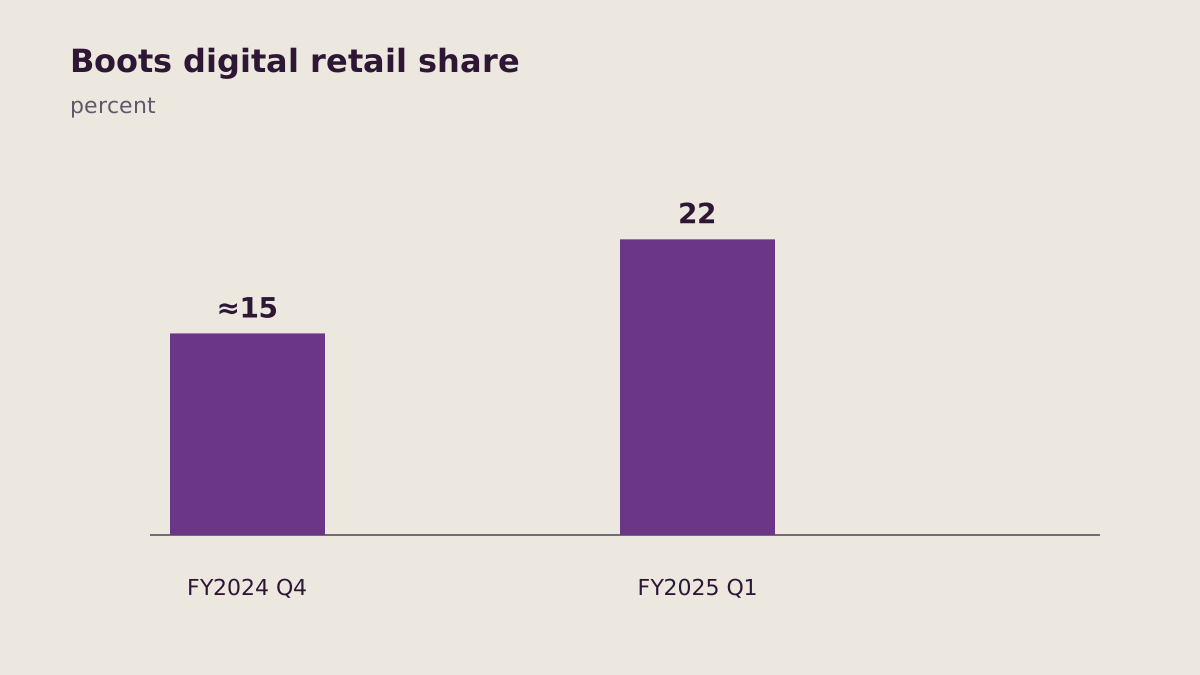
Boots’ results for the financial year ending on 31 August 2024 provide historical operating context. Comparable retail sales increased 6.9% over the year, with a 6.2% rise in the final quarter. Quarterly digital sales grew 18.7% and represented nearly 15% of retail sales. The company reported 7.5 million active app users, with the app generating 40% of digital sales. Pharmacy sales increased 10% in the quarter and 4.9% over the year. These figures show the different channels and activities within the business before the latest proposed ownership change.
The following first-quarter update, published in January 2025, covered the three months ending on 30 November 2024. Comparable retail sales increased 8.1%, while comparable pharmacy sales rose 10.9%. Digital sales grew 23% and accounted for 22% of retail sales. Active app users reached 8.1 million. Boots also reported its largest day of digital sales during Black Friday. This quarterly snapshot shows the importance of the peak shopping period to its online operation.
Store investment includes specialist formats
Boots opened its second beauty-only concept store at Bristol’s Cabot Circus on 28 May 2026. The 11,000-square-foot location followed the first such store at Battersea Power Station, which opened in December 2023. Bristol’s assortment featured more than 200 beauty and wellness brands, together with free beauty services, a wellness area and product discovery displays. The company presented the opening as part of its continuing beauty transformation. This is a specific example of investment already undertaken in a store format before the acquisition agreement, combining a specialist assortment with an in-person retail experience.
Boots’ June account of its Northern Ireland operation described another established retail network. Its first store opened in Cornmarket, Belfast, in March 1966. By the sixtieth anniversary, the operation comprised 65 stores and more than 1,200 colleagues. Boots said those pharmacies had dispensed 5.3 million items and conducted more than 47,000 Pharmacy First consultations in the preceding year. It also described the refurbishment of its Donegal Place flagship and forthcoming airport stores. The account links a regional store network with both product sales and pharmacy services, while distinguishing completed refurbishment from announced openings.
In Derby, Boots reopened a refurbished healthcare area at its Derbion Shopping Centre store in May. Its One Health format brought pharmacy, consumer healthcare, hearing care and opticians together, offering more than 30 services. The store team included pharmacists, optometrists and audiologists. The announcement also said a Bupa pay-as-you-go GP service would be included, making Derby the eighth location for that service. The project illustrates a different form of store investment from the beauty-only concept: several healthcare activities are organised within a shared location, with the scope described in the company’s announcement.
Beauty brands expand the assortment
Boots announced the introduction of Charlotte Tilbury Beauty to 31 stores in June, with the range scheduled to arrive on 3 July. More than 500 products and shades across makeup, skincare and fragrance formed the offering. The launch combined products with personalised beauty services in selected locations. Supporting research commissioned for the launch found that 87% of respondents valued tailored advice when buying beauty products. Censuswide surveyed 2,000 women aged 18 and over in the United Kingdom. This is evidence from that stated survey group, alongside a defined expansion in the retailer’s store assortment.
Another assortment expansion followed in August, when Jo Malone London launched in 39 Boots stores and online. The company said the move responded to thousands of searches for the fragrance brand on its website during the previous year. A selected fragrance range also joined its fragrance-only store at Broadgate in London. That location, opened in October 2025, displayed more than 400 niche and luxury scents. The announcement shows how Boots connected website search activity, a national store rollout and a specialist fragrance format within its wider beauty retail operation.
Customer information also featured in Boots’ sixth annual trends report, released in February 2026. The company said the report combined data from more than 17 million active Advantage Card holders with internal expertise and analysis. Its publication coincided with the introduction of 20 beauty and wellness brands. The report therefore served both as an account of the retailer’s interpretation of customer demand and as a setting for assortment announcements. The loyalty membership figure describes the active customer base used by the company, rather than the number of customers buying each newly introduced product.
A temporary collaboration with Anya Hindmarch took a different approach to product presentation. Announced in January, the concept occupied the Village Hall on Pont Street from 10 January to 8 March and drew on Boots’ pharmacy archive and 1970s styling. A co-created essentials collection was priced at £5 to £10, with a limited online release scheduled for March. The project used historical materials, packaging and a short-term physical setting to present everyday products. It provides another example of the retailer’s formats, alongside its larger permanent stores and expanding beauty ranges.
The Breakout Beauty UK programme offers a route for emerging suppliers. Boots’ April announcement described more than £1 million of programme support, including a grand-prize package valued at £850,000. The winner would gain a launch in 50 Boots stores, marketing support and mentoring, together with support from TikTok Shop. A runner-up package included an online launch and mentoring. Selected startups paid no participation charge. These were the programme’s announced opportunities, linking product development and supplier support with potential access to the retailer’s shelves and online customer base.
Online shopping extends beyond the main website
Boots announced a TikTok Shop pilot in September, scheduling the launch for 28 September. The initial selection comprised No7 skincare and beauty products from the Pro Artist, Good Intent and Prime Forever collections. Further brands and products were planned for later months. THG Ingenuity was the delivery partner, with THG Commerce and THG Fulfil managing setup, live shopping, the social-commerce experience and fulfilment. This channel combines product discovery with purchasing within a social platform. The announcement specifies the pilot assortment and operating partners without reporting a realised sales result for the new channel.
The September launch of Boots’ new brand platform also spanned several channels. An initial eight-week campaign included television, cinema, digital outdoor advertising, social media, stores and online activity. Thirty- and sixty-second films presented people at different stages of life. An integrated WPP team developed the identity and advertisements. Boots described the positioning as bringing its pharmacy heritage together with beauty, wellness and advice. The disclosure identifies the breadth and duration of the planned marketing activity. It presents the company’s positioning and media programme, rather than measuring customer conversion or the financial return from the campaign.
Digital dispensing connects stores and central facilities
The January launch of PrescriptionsPlus brought a rebranded repeat-prescription service together with an operational rollout. Customers could track orders through the Boots or NHS app and receive collection notifications. Boots also announced that its regional dispensing hub in Basingstoke would support a further 150 stores in southern England following a pilot. The automated facility was intended to dispense centrally and deliver medicines to stores within 24 hours of a prescription being issued. Boots said reducing manual dispensing would give store teams more time for customer services and acute prescriptions, describing the intended operational benefit.
An August update added text prompts when repeat prescriptions approached their reorder date, requiring customers to sign up. Boots reported that 43% of online repeat prescriptions had been ordered through email reminders, using website analytics from September 2025 to July 2026. The service combined ordering, tracking, collection and eligible home delivery. Free delivery through Royal Mail applied to patients registered with participating GPs in England, while other delivery arrangements could involve charges. The announcement develops the digital workflow around dispensing, with a measured email-ordering figure alongside the newly introduced text feature.
The service portfolio contains different operating models
Boots’ January announcement of a private adult earache service described availability in more than 145 stores. It added to a portfolio containing a private earwax-removal service and hearing-care activities. The company distinguished the adult private offering from the NHS Pharmacy First service in England, which included earache services for children within its stated age range. For the business, the announcement shows different funding and delivery models operating within the broader pharmacy network. The geographical coverage and private status define the launch, without establishing a financial result for the new service.
A May launch introduced a smaller private pilot for bone-health scanning in ten stores across the United Kingdom, Jersey and the Isle of Man. Operated by Bindex and delivered by a pharmacist or nurse, the service used a shin-bone ultrasound scan with a printed result. Boots described appointments of around 25 minutes costing £75. Customers whose results indicated a possible need for further testing would be referred to their GP. The limited pilot, price and appointment format describe its business operation; they do not establish the clinical performance or subsequent commercial expansion of the service.
Boots’ July announcement described a larger NHS service footprint. Bookings opened for a meningitis B vaccination programme planned across more than 1,200 pharmacies in England from 20 July. The company identified it as a service for eligible young adults and separately described a private vaccination offering available in more than 300 pharmacies. The distinction shows how the same retail network can support publicly funded programmes and private services with separate coverage. These are the announced service arrangements and store counts, rather than a measure of completed appointments or revenue generated by the programme.
Partnerships can introduce another route to the service portfolio. In March, insurer Vitality announced a collaboration with Boots beginning with discounted access to its online weight-management service from the spring. The partners said additional services, products and member benefits would follow. Their announcement described a connection between private health insurance and the retailer’s healthcare offering. It sets out the initial service and the intention to broaden the partnership, without providing a completed count of additional services. This is a commercial access arrangement within the wider mix of online and store-based activities.
Public pharmacy funding shapes the operating setting
The pharmacy network also operates within public contracting arrangements. The government’s 2025 settlement for community pharmacies in England set core funding for 2025–26 at £3.073 billion, with £215 million for Pharmacy First and related services available separately. The agreement wrote off £193 million of historic medicines-margin over-delivery. From April 2025, the single activity fee increased from £1.27 to £1.46, and Pharmacy First consultation fees rose from £15 to £17. This historical settlement describes sector-wide payment arrangements for that financial year, providing context for the publicly funded portion of pharmacy business.
The next settlement, published in May 2026, set total funding for 2026–27 at £3.636 billion, an increase of £340 million or 10.3%. Pharmacy First funding was incorporated into the contractual framework. The single activity fee increased from £1.46 to £1.52, while retained medicines margin rose by £200 million to £1.1 billion. Up to £239 million of historic over-delivery would be written off. These are England-wide arrangements rather than a payment allocated specifically to Boots. They define a broader financial setting for contractors supplying medicines and delivering commissioned pharmacy services.
Seasonal operations require stores and fulfilment capacity
On the same day as the acquisition report, Boots announced recruitment for around 6,000 festive roles. Opportunities covered stores, warehouses and the customer support centre. The company’s network description referred to more than 1,800 stores and 51,000 colleagues, with those figures dated February 2026. Seasonal roles included customer advisers, operations assistants, warehouse workers and pickers. Boots also described store support for website shopping, collection and on-demand delivery partners. Peak-season work spans stores, the supply chain and customer enquiries:
- Store customer advice and operations.
- Warehouse picking and packing.
- Customer support for shopping enquiries.
The Weston group brings a separate pharmacy context
Loblaw’s first-quarter 2026 results offer context for the Weston group’s existing Canadian retail business. For the quarter ending on 28 March, retail revenue reached C$14.484 billion, up 4.2%. Comparable sales at Shoppers Drug Mart grew 4.1%, with pharmacy and healthcare services increasing 6.7% and front-store sales 1%. Group ecommerce sales rose 20.3%. These figures belong to Loblaw’s reported operation. They show pharmacy, retail merchandise and digital sales within that business, while remaining separate from the proposed acquisition price and the operating results of Boots itself.
Loblaw’s next quarterly release covered the period ending on 20 June. Retail revenue reached C$15.046 billion, increasing 4.1%, while comparable drug-retail sales grew 4.6%. Pharmacy and healthcare services increased 7.5% on a comparable basis, against 1.3% for front-store sales. The group reported ecommerce growth of 19.3% and opened 14 stores across its food and drug network, including three drug stores. The results describe the performance of an existing retail and pharmacy operation, giving more detailed context for the experience cited in the Boots transaction announcement.
A September Loblaw announcement added investment context. The company expected to spend about C$1.2 billion in capital expenditure during the remainder of 2026 within a broader C$2.4 billion annual programme. It had opened 38 grocery stores and pharmacies, comprising 21 grocery locations and 17 Shoppers Drug Mart stores. Planned work included renovations to more than 190 locations. A pharmacy food-assortment realignment had reached 17 stores, with 43 expected by year-end. These Canadian projects describe the group’s ongoing operating approach; the announcement did not identify them as funding commitments for the proposed Boots acquisition.