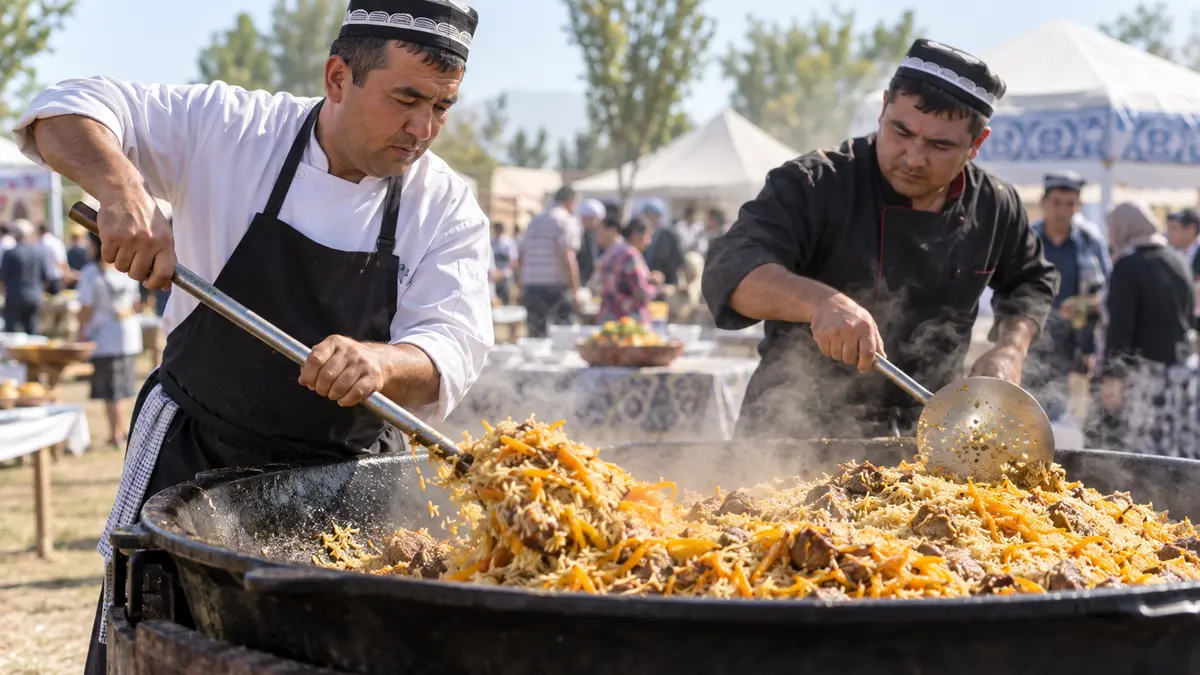
EkoNiva’s growth discussion in June 2026 presents a management problem that is more precise than a general question about whether a dairy business should expand. Existing farms can accommodate more animals; unfinished farms need further capital; processing operations have local bottlenecks; and the cost of financing has risen. Each opportunity belongs to a different investment decision. Treating all of them as one growth programme would conceal the timing, operational requirements and cash demands that distinguish them.
In an Interfax interview published on 3 June 2026, founder and president Stefan Dürr described the group’s production figures, investment intentions and financing constraints. His account is the factual basis of this analysis. The operating questions below are our interpretation of that account, rather than a disclosure of EkoNiva’s internal investment model. The interview does not provide project cash flows, farm-level profitability or a complete debt schedule, so those cannot be reconstructed from the headline figures.
First establish which tonnes are being compared
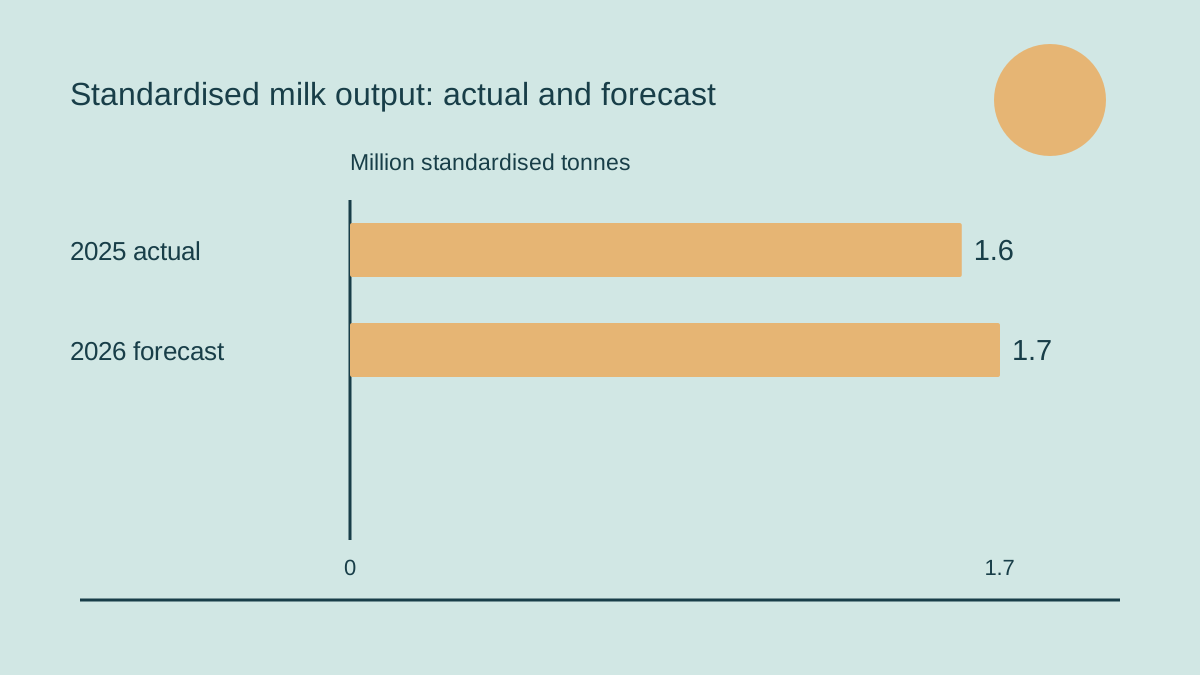
Dürr said the group produced 1.45 million tonnes of raw milk in physical weight in 2025 and 1.6 million tonnes in standardised weight. He explained that the group adjusts the reported volume because its milk has relatively high fat and protein content. For 2026, he expected 1.7 million tonnes in standardised weight. The comparable increase is therefore between 1.6 million and 1.7 million standardised tonnes. Comparing the forecast with the physical-weight figure would mix measurement bases and overstate the apparent growth.
This distinction matters before any discussion of investment productivity. A manager needs to know whether additional output represents more liquid milk, a different composition, or a combination of both. A buyer or processor may attach value to the components as well as the volume. Yet the interview does not disclose the detailed conversion formula or payment terms. Standardised output is useful for following the company’s reported production trajectory; it cannot, by itself, establish revenue per physical tonne.
The same discipline applies to forecasts. The 1.7 million figure was an expectation for the year, expressed in June. A possible two million standardised tonnes in 2027 was conditional on further favourable development. Neither number should be presented as an achieved production result. The analytical task is to understand the operating steps behind the expectation and the evidence that would subsequently be needed to confirm it.
Growth within existing infrastructure is a distinct project
Dürr described an expansion of ten farms by approximately 1,000 cows each. The group had previously built farms around 2,800 milking cows, corresponding to its 72-place rotary milking installations, and had learned to use the same installations for around 3,800 cows. Some expansions were already operating, while the remaining ones were expected to start shortly. His account points to a route that makes greater use of existing infrastructure rather than immediately constructing an entirely separate farm.
The potential attraction is straightforward: when useful infrastructure already exists, an additional unit of production may need less new construction than a new site. But that is a question about the incremental project, not a claim that every surrounding resource has spare capacity. More animals also require adequate feed, water, housing arrangements, veterinary support and staff time. The interview identifies the group’s herd, own-produced feed and specialist teams as strengths, but supplies no resource balance for each expanded farm.
A practical assessment would therefore examine the whole operating chain. A milking installation can handle more animals only if the resulting schedule remains workable and the supporting activities keep pace. The relevant test is whether the expansion removes unused capacity without creating a more expensive constraint elsewhere. Dürr called this an economical growth option; independent confirmation of its cost advantage would require the project’s incremental expenditure and operating results.
Completing farms involves a different capital clock
The interview also identified two farms that were being completed: Staroye Rezyapkino in the Samara region, planned for 3,550 cows, and Kurochkino in Altai Territory, planned for 6,000 cows. Dürr expected their commissioning closer to the end of 2026. These projects differ from increasing herd numbers around existing equipment because further construction must be finished before the full operating contribution can emerge.
The timing distinction is important. An investment can be justified over a long operating life and still create a difficult cash period before output develops. Construction payments, staffing, animal placement and the ramp-up of production do not necessarily occur on the same day. The interview does not give those schedules, so it would be inappropriate to assign a specific payback period to either farm. What it does establish is that completion and subsequent operation belong to the growth plan.
Managers assessing such a portfolio should distinguish capital needed to finish an existing commitment from capital for a new optional project. Previous expenditure is not sufficient reason to keep spending regardless of changed circumstances, but stopping also has consequences for unfinished assets. The decision requires an updated view of the remaining cost and prospective operating contribution. That is a general project-management principle, not evidence that EkoNiva has chosen a particular valuation method.
A late-year commissioning date also changes how an annual result should be read. Capacity available at the end of December is not equivalent to production available for all twelve months. A later comparison would need to separate the opening milestone from the time spent operating and the pace of the ramp-up. That observation does not predict an exact monthly production path for either farm. It identifies why an end-of-year capacity statement cannot substitute for a comparable full-year output measure. Verification needs both the opening timetable and actual output for the chosen period, rather than only the stated herd capacity.
The investment buckets should retain their original status
Dürr described approximately RUB4 billion for expansion of complexes in the Voronezh, Kaluga and Ryazan regions and Bashkiria, about RUB10 billion for the farms under construction in the Samara region and Altai Territory, and a desire to put around RUB3 billion into milk-processing expansion and modernisation. The figures identify different uses of capital. Their simple sum would not reveal how much had already been paid, formally committed or financed.
- Existing-farm expansion: assess the additional production enabled by infrastructure already in place.
- Farm completion: identify remaining construction costs and the period before operating cash develops.
- Processing improvements: establish the specific constraint that each proposed addition would remove.
- New optional projects: compare future benefits with financing costs and the effect of waiting.
These categories create a more useful investment discussion than an undifferentiated total. They also preserve the interview’s wording: an investment intention, a construction requirement and a desired processing allocation are not identical forms of commitment. The source does not publish a board-approved consolidated capital budget with expenditure dates. Our analysis therefore uses the buckets to understand the sequence of decisions, without presenting their arithmetic as a verified funding requirement.
Processing bottlenecks can be small in cost and large in consequence
Dürr described processing investment as targeted work on bottlenecks: adding refrigeration in one place or a relatively small line in another. This suggests a different way to examine productivity. A large upstream production increase does not automatically become more saleable finished product if processing, storage or product changeovers constrain the flow. A smaller downstream intervention may matter because it connects capacity that already exists elsewhere.
The important unit of analysis is the constraint being addressed. A proposed refrigerator should be assessed against the storage problem it solves; a line addition against the process or product it enables. The interview does not disclose the performance of particular assets or quantify the loss caused by individual bottlenecks. It would be misleading to manufacture savings estimates from the mere fact that modernisation is planned.
A disciplined operating review would ask what happens before and after the proposed intervention. Does it increase throughput, reduce waiting, improve scheduling or support a different product mix? Which other resources must change for the benefit to appear? Those questions are useful because they tie spending to an observable operating result. They also keep the analysis from treating every piece of new equipment as an equivalent contribution to growth.
Bringing milk drying inside the group changes several dependencies
The interview’s larger processing example was a possible milk-drying operation at the Anninsky dairy plant in the Voronezh region. Dürr said EkoNiva then used partner factories for drying and encountered logistical and sometimes quality difficulties. The proposed operation was designed around processing roughly 300 tonnes of raw milk per day and producing 24–25 tonnes of skimmed milk powder, primarily for export. He suggested a possible launch in the following year if conditions were favourable, while saying the timing remained difficult to determine.
This is a conditional project, not a completed transfer of all drying activity. Its possible benefit involves control over a processing stage, scheduling and interfaces with outside plants. Its cost involves building and operating an additional capability. Owning a process may remove one dependency while introducing others, including equipment operation, maintenance, staffing and the need to keep the line supplied.
The raw-milk input and powder output figures describe different products and stages. They should not be compared as if they represented a loss of equivalent saleable tonnes. Nor do the daily design figures establish a yearly output: operating days, utilisation and product specifications are not supplied. The appropriate conclusion is narrower: management identified drying as a potential way to address a reported processing problem, subject to a future investment and operating decision.
Financing pressure can alter the order of otherwise viable projects
Dürr said low raw-milk prices, high interest rates and reduced subsidies had led the group to pause some plans. He also said its interest burden in 2025 had risen by more than 1.6 times compared with 2024. This is an attributed description of the company’s financing pressure, not a disclosure of total debt, average borrowing cost or interest coverage. Those additional metrics would require financial statements and a detailed financing schedule.
His discussion of long-lived dairy assets explains why the timing of finance matters. He described payback periods exceeding ten years without state support and said effective subsidised-credit rates around 5%–6%, or even 7%–8%, could allow development. These ranges express his view of the sector’s conditions; they are not a rate quote available to every borrower or a recommendation that a reader should take a loan.
For capital sequencing, the implication is that an operationally attractive project may need to wait if the financing structure creates an unacceptable early cash burden. Conversely, a smaller intervention that quickly releases existing capacity may deserve attention even if it does not produce the largest announced output. The interview supports examining that trade-off, but does not provide the data needed to rank EkoNiva’s individual projects conclusively.
Financing diversification and operational growth are separate tests
Dürr described the group’s March 2026 bond-market debut as a way to diversify funding and help financial-market participants understand the business. He referred to an A+ rating from ACRA and discussed public-market reputation as preparation for a possible eventual share listing. He also made clear that an IPO was not a current plan for immediate execution. An aspiration toward greater public visibility should not be rewritten as a scheduled flotation.
There are two tests here. A company may improve access to financing without changing the operating quality of a project. It may also improve operations without having enough suitably structured funding to implement the next expansion. A sound growth narrative needs both an operating explanation and a financing explanation; success in one does not automatically establish success in the other.
This analysis does not assess whether the group’s securities are attractive investments. The interview alone does not provide the terms, risks or valuation evidence for such a judgement. The relevant business-management observation is that funding diversification can enlarge the set of possible financing arrangements while leaving repayment obligations and project discipline in place.
Revenue mix does not settle the cash-flow question
Dürr reported total group revenue of RUB103 billion for 2025 and almost RUB78 billion from raw-milk production and processing together. He also said online channels accounted for more than 15% of retail sales of finished dairy products under the EkoNiva brand. These figures use different denominators: the online percentage is not a share of total group revenue. Conflating them would distort the scale of the channel.
The mix provides context for the growth discussion but does not establish profitability by business line or sales channel. Revenue can be large while the timing of cash receipts remains important. Processing and selling more finished products also involves commercial choices about inventories, delivery and customer terms. None of those detailed economics is disclosed in the interview.
The source therefore supports a careful distinction between the scale of the core dairy business and the evidence still needed to understand project cash generation. A useful follow-up would connect a proposed capacity addition to the product that is expected to sell, the operating resources required and the timing of collection. It would not assume that a revenue headline resolves all three questions.
What would demonstrate that the sequence is working?
The case offers a practical framework for reading an expansion plan in Russia: start with comparable output units, separate use of existing assets from completion of new ones, identify downstream constraints, and keep financing arrangements attached to cash timing. These are analytical steps drawn from the interview’s distinctions, not a claim that the group has published this exact framework.
Evidence of execution would come from later commissioning updates, comparable production figures, remaining project expenditure and information about financing and cash generation. The June interview supplies management’s expectations and the reasons behind them. It does not supply the later results. Preserving that boundary makes the article a record of how the growth decision looked at the time, rather than a retrospective success story assembled from forecasts.
The central lesson is about sequence. Increasing production, completing farms and improving processing can reinforce one another, but they place different demands on resources and finance. The strongest reading of the announced plan asks how those demands fit together and what must happen next for the stated benefits to appear.