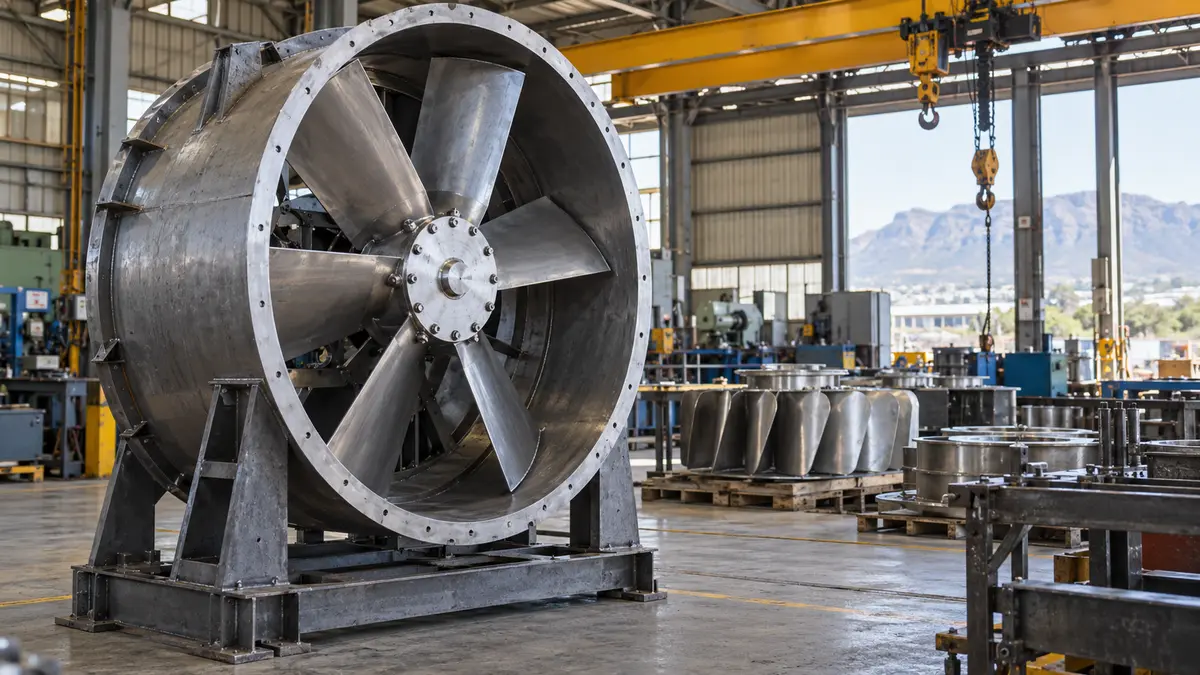
A busy plant can produce more goods without producing more cash for the business. That is not a contradiction: production, earnings and collection measure different stages of an operating cycle. Severstal’s second-quarter 2026 account offers a case for reading those stages separately. The management question is how commercial results, money tied up in operations and investment payments combine, rather than whether factory activity alone proves financial resilience.
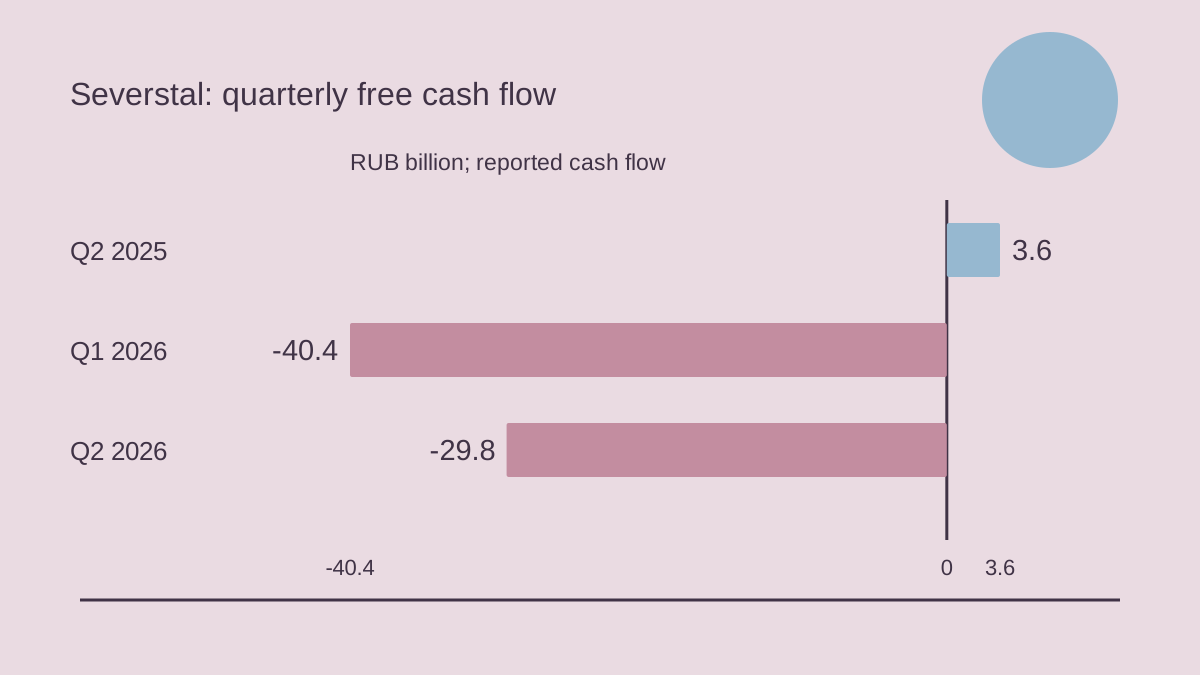
An Interfax report published on 20 July 2026, citing the company, gave quarterly EBITDA of RUB24.4 billion and free cash flow of negative RUB29.8 billion. Working capital absorbed RUB22.4 billion, attributed to receivables growth and reduced factoring. Investment was approximately RUB25.3 billion. Capacity utilisation approached full use. Total debt rose from RUB60.1 billion at end-2025 to RUB95.7 billion, with the increase attributed to floating-rate bank loans. These reported facts support the analysis below; they do not disclose every item needed to rebuild the cash-flow statement.
Factory activity is the beginning of the cash question
Production creates goods that can be sold, but it does not establish when the corresponding money reaches the company. A commercial transaction can sit between physical output and collection. A review that follows only tonnes or utilisation therefore stops before the operating cycle is complete. It needs the later stages before drawing a conclusion about resources available for other uses.
This distinction also prevents two opposite shortcuts. A highly utilised plant is not automatically a source of abundant cash. Negative cash flow does not automatically prove that the plant lacks orders or is physically idle. The operating evidence and the financial evidence must each be examined on their own terms before their connection can be explained.
For a management review, the useful starting point is a sequence: production, delivery, the relevant commercial and accounting result, and cash collection. The source does not provide a customer-by-customer sequence. This article therefore proposes questions for interpreting the reported result, rather than assigning undisclosed payment terms or delivery arrangements to Severstal.
EBITDA is not a bank-account movement
EBITDA describes earnings before interest, tax, depreciation and amortisation. Its purpose and construction differ from a measure of cash remaining after investment. It cannot, by itself, show when customers paid, when suppliers were paid or how much money was spent on assets. A positive earnings measure can consequently coexist with a negative cash-flow measure.
A useful reading should preserve the company’s definitions and calculation perimeter. A short announcement may supply a headline number without the detailed adjustments used to calculate it. The analyst should not assume that every business defines every adjusted measure identically or that an earnings figure can be carried straight into a cash calculation without further reconciliation.
The practical consequence is to ask what connects earnings with cash from operations and what then connects operating cash with the reported free cash flow. Those are separate bridges. Where the source does not supply their components, the review should leave the missing information visible instead of filling it with an apparently plausible balancing item.
Working capital describes money committed to the cycle
A business can require cash while its commercial activity continues. Receivables are one part of that problem: a sale can generate an amount due from a customer before the customer pays. Other operating balances can also affect the timing of receipts and payments. The source attributes the reported absorption to receivables and factoring, but does not disclose a complete balance-by-balance movement.
A review would therefore distinguish an amount outstanding at a date from a cash movement during a period. The two answer different questions. A closing receivables balance describes the position at that date; its movement and related transactions help explain a period’s cash result. Treating the closing balance as if it were the period’s entire outflow would misread the measure.
The business-management objective is to understand which part of the cycle needs money and why. That requires consistent periods and definitions. A total labelled as working-capital absorption can identify an important pressure, but it cannot reveal every customer, invoice or operational cause. Those details require the underlying records rather than inference from the headline alone.
Receivables growth needs a composition and ageing review
A larger receivables amount does not, by itself, establish deteriorating payment behaviour. It could reflect the timing of sales, the terms of transactions or other movements. To distinguish explanations, a reviewer would need the composition of the balance and the relationship between invoice dates, due dates and actual receipts. None of that customer-level detail is provided in the report.
A practical analysis would separate amounts not yet due from overdue amounts and explain material changes in each category. It would also distinguish a disputed invoice from a routine payment awaiting its agreed date. Those categories imply different actions. A blanket claim that all additional receivables represent delinquent customers would erase the distinctions and add an unsupported conclusion.
Collection evidence should be examined alongside the relevant commercial activity. A later payment can help explain a timing effect, while a persistent unresolved amount may require a different investigation. This is a proposed diagnostic process, not a statement about subsequent collections or bad debts at Severstal. The historical source does not disclose those later outcomes.
Reduced factoring changes a cash channel, not necessarily the sale
Factoring can provide earlier funding against receivables, depending on the arrangement. If a business uses less of that channel, money may remain tied to customer payment for longer even when the underlying sale exists. That general relationship helps make sense of the source’s attribution. It does not disclose the terms or accounting treatment of the company’s actual agreements.
A useful review would ask how funding volumes changed, what receipts the transactions previously accelerated and what happened to the remaining receivables. It would also need fees, payment conditions and the allocation of relevant risks to evaluate the arrangement fully. Without those terms, the analysis cannot establish why the company used less factoring or whether increasing it would be commercially preferable.
The important boundary is between identifying a reported cash effect and recommending a financing response. The announcement supports examining the first. It does not provide enough evidence for the second. A management discussion should keep that gap explicit rather than assume that every receivable can be financed on acceptable terms or that an earlier receipt is costless.
Investment payments need their own view
Spending on assets can absorb money even when operating activity is profitable. A current payment, an approved programme and a future commitment are different measures. The reported quarterly investment amount should not be treated as the total remaining cost of every project or as proof that the whole programme has reached a particular completion stage.
A project review would need payments already made, obligations still outstanding and the events that trigger later payments. It should connect those events with the delivery or commissioning schedule. A change in quarterly spending might reflect several causes, so the percentage movement alone cannot establish which work was completed, delayed or revised.
The useful management question is how the investment schedule fits the operating cash cycle. That requires a view of both, not a conclusion from one quarterly total. The source supplies an important expenditure measure but not a complete project funding plan. This analysis therefore does not estimate the remaining investment need or claim that a specific project caused the entire cash deficit.
Do not manufacture a complete cash bridge from three numbers
It is tempting to subtract reported working-capital absorption and investment from EBITDA and call the result free cash flow. That shortcut assumes that the selected measures contain all relevant adjustments and use compatible definitions. The report does not establish those assumptions. A cash bridge can include other items, and the company’s own measure must be read according to its definition.
The appropriate response to an incomplete bridge is to request the missing components. It is not to name the unexplained difference as tax, interest or another item without evidence. Such a label would make the arithmetic look resolved while introducing a fact the source never supplied. A visible residual is more useful than a fabricated reconciliation.
A complete review would start with the relevant statement and supporting notes, check the signs of each movement and distinguish operating, investing and financing flows. The short account is a starting point for that work. It establishes the direction of the reported pressures, but it does not replace the records required to reproduce the company’s cash measure.
Quarterly and half-year comparisons must retain their periods
A quarter-on-quarter comparison asks how the latest quarter differs from the immediately preceding one. A year-on-year quarterly comparison asks how it differs from the corresponding quarter a year earlier. A half-year total combines periods and answers another question. These comparisons can point in different directions without being inconsistent.
A management report should label the basis beside the movement rather than leave it in a distant table heading. It should also distinguish a reduction in the size of an outflow from a return to positive cash generation. An improvement from one negative number to a smaller negative number remains an outflow. Calling it a cash surplus would change the meaning.
The same care applies when combining a flow over a quarter with a debt position at a date. They should be connected through a reconciliation, not presented as the same measurement. Keeping the periods explicit makes later results comparable and prevents a reader from using a favourable comparison to erase an unfavourable result on another basis.
Debt growth and floating-rate exposure are separate questions
An increase in debt identifies a change in financing outstanding. It does not, on its own, reveal the full maturity schedule, security terms or future repayment capacity. The source’s attribution to floating-rate loans adds a different dimension: the cost of that funding depends on the contractual rate mechanism. The relevant terms are not disclosed in the short account.
A practical funding review would examine the reference rate, margin, reset dates and any other features that affect interest payments. It would also distinguish the amount outstanding from the amount becoming payable in a selected period. This is a framework for identifying necessary information, not a calculation of Severstal’s future interest expense.
Scenario work could then test how cash requirements change under clearly stated assumptions. It should keep the assumptions separate from company guidance and from observed results. Without the contractual schedule, a precise interest forecast would imply knowledge the analyst does not have. The useful conclusion is that funding quantity and funding sensitivity need related but distinct evidence.
Liquidity needs a calendar, not only a closing snapshot
A snapshot can identify available money and outstanding obligations at a date, while a liquidity assessment also needs their timing. Expected receipts, operating payments and debt maturities may not coincide. A company can have substantial activity and still need to manage a difficult interval between payments and collections. The source does not supply a complete calendar for those events.
A practical cash schedule would show expected flows by the periods relevant to actual obligations and identify uncertain receipts. It would distinguish committed funding from possibilities still under discussion. Where a receipt depends on a project or customer event, that dependency should remain visible. This avoids treating every expected amount as equally certain and immediately available.
Such a schedule would help management decide what requires closer monitoring. It would not automatically justify an external claim of insolvency or abundant spare cash from a single negative quarterly result. Either broad conclusion needs stronger evidence. This analysis concerns the reported operating cash pressures and the information needed to understand them.
A checklist for following activity into cash
For an industrial business in Russia, the case suggests a practical way to examine the connection between a busy factory and financial resources. The checklist below is our analytical proposal. It is not a claim that the company uses precisely this internal process, and it does not assess the attractiveness of its securities.
- Follow production through delivery and collection before drawing a cash conclusion.
- Keep EBITDA, operating cash and free cash flow distinct.
- Separate closing working-capital balances from period cash movements.
- Investigate receivables by terms, due dates and actual receipts.
- Explain factoring changes without inventing contract conditions.
- Connect investment payments with outstanding commitments and project stages.
- Reconcile cash measures using disclosed components rather than guessed adjustments.
- Label quarterly, annual and half-year comparison bases explicitly.
- Review debt maturities and rate sensitivity alongside the cash calendar.
The July account is most useful when it preserves these boundaries. Activity demonstrates work in the operating system; earnings describe a financial result; working capital and investment help explain cash demands. None of them is a substitute for the others. A stronger account follows the connections and identifies the missing evidence instead of turning one positive operating signal into a complete judgement about cash resilience.