
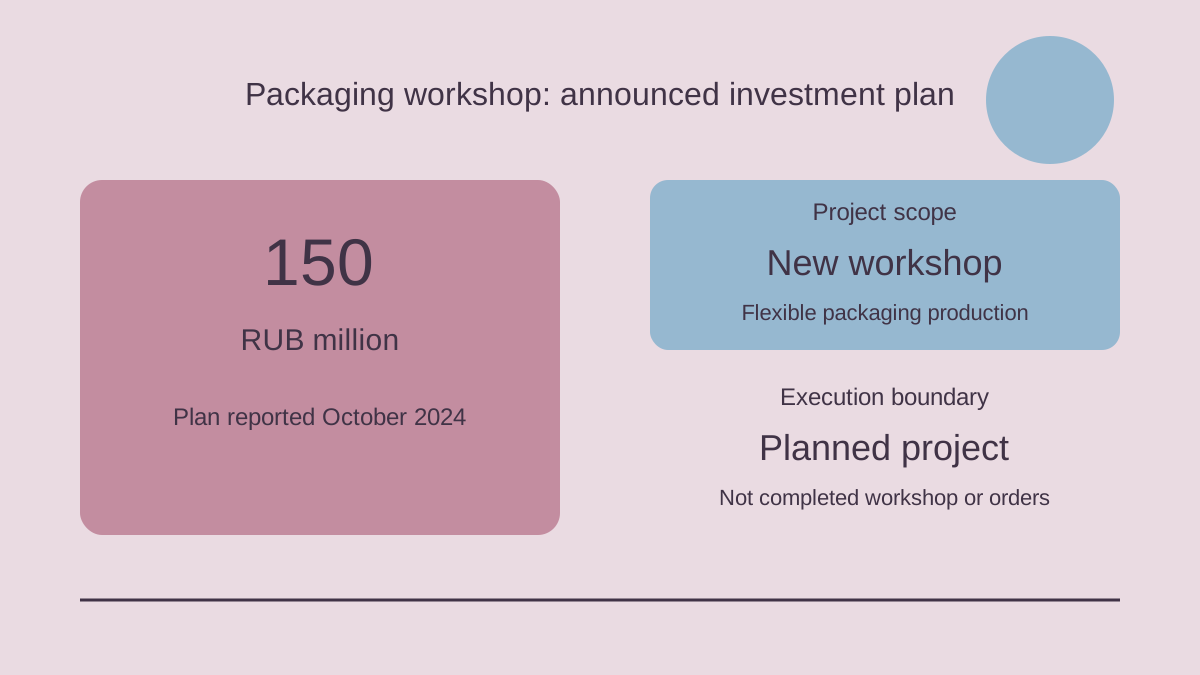
Zavod Upakovki plans a flexible-packaging workshop in Novosibirsk region with investment of 150 million roubles, according to Interfax’s October 3, 2024 report, which attributes the information to the regional development corporation. The announced project is associated with the Yuzhny industrial and logistics park. It is a plan for an additional production footprint, rather than confirmation of a completed workshop or fulfilled orders.
The operating question raised by such an expansion is how a packaging order remains recognisable when more space and more production choices become available. A customer buys a specified result, while a workshop organises material, artwork and work in progress. Linking those two views requires a clear boundary around each order. The discussion below is original analysis of that boundary, not a description of Zavod Upakovki’s internal systems, customer contracts or actual production arrangements.
The building and the order answer different questions
A planned workshop answers a question about where a business intends to create production space. It does not, by itself, identify which customer orders will use that space, which versions of their specifications will apply, or when the resulting goods will be available. Those are different objects of explanation. A useful expansion narrative therefore preserves the relationship between the site project and the customer commitment without treating either as a substitute for the other.
This distinction becomes important when an organisation discusses additional capacity in the same meeting as an existing delivery requirement. A proposed building may improve the future range of choices, but the current order still needs a defined route and status. A team should be able to explain that status using the resources and decisions actually assigned to the order. Referring to a future workshop does not establish that the workshop can already support the commitment under discussion.
For the Novosibirsk announcement, the planned investment creates a reason to examine those connections. It does not establish how the company will allocate work between locations or whether any existing process will move. The analysis can ask what a clear allocation would require without asserting that a transfer has been decided. That keeps the business question attached to the event while avoiding a fictional account of what the producer will do behind the factory gate.
An order needs one identifiable specification
An order boundary begins with the agreed product description. For a hypothetical packaging order, that description might refer to a particular format, artwork revision and quantity unit. These examples illustrate information categories; they are not published specifications for this company’s products. The important point is that the description should identify one agreed version rather than a collection of similar files from which different teams could choose different answers.
A file name alone may be a weak reference if a later conversation changes its meaning. An evaluator can instead ask how the order identifies the applicable description and how a proposed change is distinguished from an agreed one. That question concerns the integrity of the order record. It does not require the editor to prescribe a production technique, a material composition or a technical acceptance threshold. Those details belong to the actual product requirement and the parties competent to define it.
More production choices can make this information problem more visible. If two possible routes are discussed for one order, each should refer to the same agreed description unless a change has been explicitly identified. Otherwise, apparent flexibility may conceal a difference in the product being discussed. A clear specification reference helps a customer understand whether the supplier is offering another way to fulfil the same requirement or proposing a different requirement altogether.
Artwork approval should have a visible status
Packaging artwork can be discussed, revised and agreed at different moments. In an illustrative order record, those states should remain distinguishable. A draft sent for comment is not automatically the version agreed for the order. A later design conversation is not automatically a replacement for an earlier agreement. The analytical issue is how the record explains the current status of the artwork, not an assumption about this producer’s approval method.
This is particularly useful when a discussion spans commercial and production roles. A commercial contact may refer to a customer’s latest message, while a production planner refers to the version previously assigned to the job. Both references can be understandable in isolation and incompatible when combined. An order boundary gives them a common question: which revision is currently associated with this commitment, and which proposed revision still needs an answer?
A clear change record would also distinguish the effect of an artwork revision from the mere existence of a new file. A proposed revision might concern a later batch rather than work already assigned. Alternatively, the parties might need to reconsider the current order. Neither outcome should be assumed from the file’s date alone. The record should preserve the scope of the decision so that a new document does not silently redefine an earlier customer commitment.
Quantity needs its own unit and reference
A production discussion and a customer order can describe quantity in different units. In a hypothetical example, one discussion might count rolls while another counts an agreed length. The existence of two units does not create an error; an unexplained relationship between them creates uncertainty. An order description should make its own unit explicit and identify any conversion that the parties actually use. The article does not supply a conversion or infer one from the investment announcement.
The same caution applies to an order divided into parts. A total can remain unchanged while the schedule, allocation or status of its parts changes. A compact record should allow someone to see both the agreed total and the pieces being discussed. Otherwise, a progress statement can sound precise while concealing whether it concerns the whole commitment or only a portion. The useful question is what the number describes, not whether a larger number automatically looks like stronger progress.
Quantity also needs a relationship with the specification. Two quantities associated with different artwork revisions cannot simply be discussed as interchangeable progress on one undifferentiated order. They may belong to separate commitments or to an explicitly agreed change. An order boundary keeps that distinction visible. This is an information argument about customer expectations, not a claim that the company has mixed revisions, lost material or used an unsuitable reporting system.
A hypothetical split across two production choices
Consider an entirely invented order for 100 units of an agreed packaging item, using one identified artwork revision. The unit is deliberately abstract, and the example describes no actual customer or factory result. Suppose a project team considers assigning 60 units to an existing production route and 40 to a candidate route associated with an expansion. The allocation creates two parts of the same hypothetical commitment; it does not create a second customer order.
Now suppose the record shows the first 60 as ready for the agreed next step, while the remaining 40 still await a route decision. Saying that the order is 60 units advanced is meaningful only if the next step and the outstanding portion are explained. Saying that the expansion has solved the entire order would go beyond the example. The candidate route is still a choice under discussion, and the total commitment remains 100 units rather than 60.
- Identify the customer commitment and the specification revision attached to it.
- Keep the total quantity distinct from the quantity allocated to each route.
- Describe the actual status of each part using the same order reference.
- Separate an available production choice from a choice that remains conditional.
- Record the scope of a proposed change before treating it as agreed.
- Explain which customer question remains unresolved after the allocation.
This invented case is a tool for examining the meaning of an order status, not a production plan or a recommendation to divide work. A real allocation would require the relevant product and operating information from the supplier. Its value here is to show that a new production choice does not erase the original commitment’s boundaries. The customer still needs an explanation of the specified result, its quantity and its current status.
Work in progress should remain connected to its order
More production space can prompt a discussion about where partly completed work belongs. The order perspective asks a different question: what does that work represent in relation to the customer commitment? An illustrative record could connect a work item to the applicable specification and the remaining steps without treating its physical presence as a finished delivery. This does not describe the company’s actual material tracking or assume that work will move between premises.
The distinction between physical location and order status helps prevent a misleading progress narrative. An item being present at a workshop does not, by itself, show that its required next step is complete. Conversely, a location change does not necessarily change the agreed customer requirement. The record should explain the relationship rather than allow the address to stand in for the answer. This is particularly relevant when an expansion announcement encourages people to focus on the new site.
For a customer conversation, the useful level of detail is the information needed to understand the commitment. That may be less detailed than an internal production record but more specific than a general statement that work is under way. A supplier can explain which step is complete, which part remains open and which agreed version applies. The reader should not infer those details from construction progress or the amount allocated to the expansion project.
Customer changes need a stated scope
A customer may ask a supplier to discuss a different quantity, artwork or delivery arrangement. An order boundary makes the scope of that request explicit. Does it concern the existing commitment, a later part of the same commitment or a possible future order? The question matters because a conversation about future flexibility can be mistaken for a change to current work. An expansion can create new options without automatically changing what has already been agreed.
A proposed change also needs a relationship with the existing record. Keeping both versions visible until the decision is explained can help a team avoid speaking as if the new proposal has already replaced the old requirement. The final arrangement should be stated by the parties involved. This analysis does not invent a contractual right to change an order, a fee for doing so or a guaranteed response time. It addresses the clarity of the information used to discuss the request.
That clarity can improve the quality of the next question. Instead of asking whether the new workshop will make everything more flexible, a customer can ask whether a particular proposed revision can be considered for a particular portion of an order. The supplier can then answer within an identifiable scope. The broad expansion story remains relevant as context, while the individual commitment retains enough definition for the conversation to produce a useful answer.
Progress should be reported at the right boundary
An expansion project and an order can both have milestones, but their milestones do not mean the same thing. A site decision belongs to the project. A defined order status belongs to a customer commitment. Reporting the two together can be useful if the connection is explained; merging them can imply a result that neither record establishes. The editor’s task is to maintain the difference while showing why the planned workshop raises the question.
In the hypothetical 100-unit example, the statement about 60 units describes one part of an order at an identified stage. It does not measure the completion of a building, the utilisation of a new production line or the performance of the supplier’s wider business. Each of those would require another object and another evidence base. Keeping the order boundary visible prevents a narrow status from being turned into a sweeping conclusion about the expansion.
A useful customer update can therefore remain compact. It needs the relevant commitment, its current agreed version, the quantity or part under discussion, and the remaining question. Extra information about the site project should explain a dependency rather than replace these fields. This proposed structure does not establish that Zavod Upakovki uses such updates. It shows what a reader might ask for when trying to connect a planned investment with a specific future order.
Expansion adds choices; the commitment keeps its identity
The commercial attraction of additional space is the possibility of supporting more useful production choices. Possibility deserves attention, but it should remain distinct from a proven customer outcome. The announcement does not demonstrate shorter delivery times, lower costs, reduced waste or compatibility with any particular customer requirement. Those claims would need evidence connected to the actual product and order. The original analysis can explain that evidence relationship without supplying an invented operating result.
For the planned Novosibirsk workshop, the order boundary provides a concrete way to read the expansion. The relevant question is how a specified product, an artwork revision, a quantity and a status remain connected when the range of choices changes. An expansion can be described accurately at the project level while those order questions remain open. Recognising that does not diminish the investment announcement; it identifies the further information needed to understand its practical meaning for a customer.
The strongest conclusion is therefore limited and useful. A new production footprint should be assessed alongside the clarity of the commitments it may eventually support. The site story explains intention. The order record explains the agreed result and its current state. Connecting them without collapsing their boundaries would allow customers to follow the development of the expansion while continuing to ask precise questions about their own requirements.