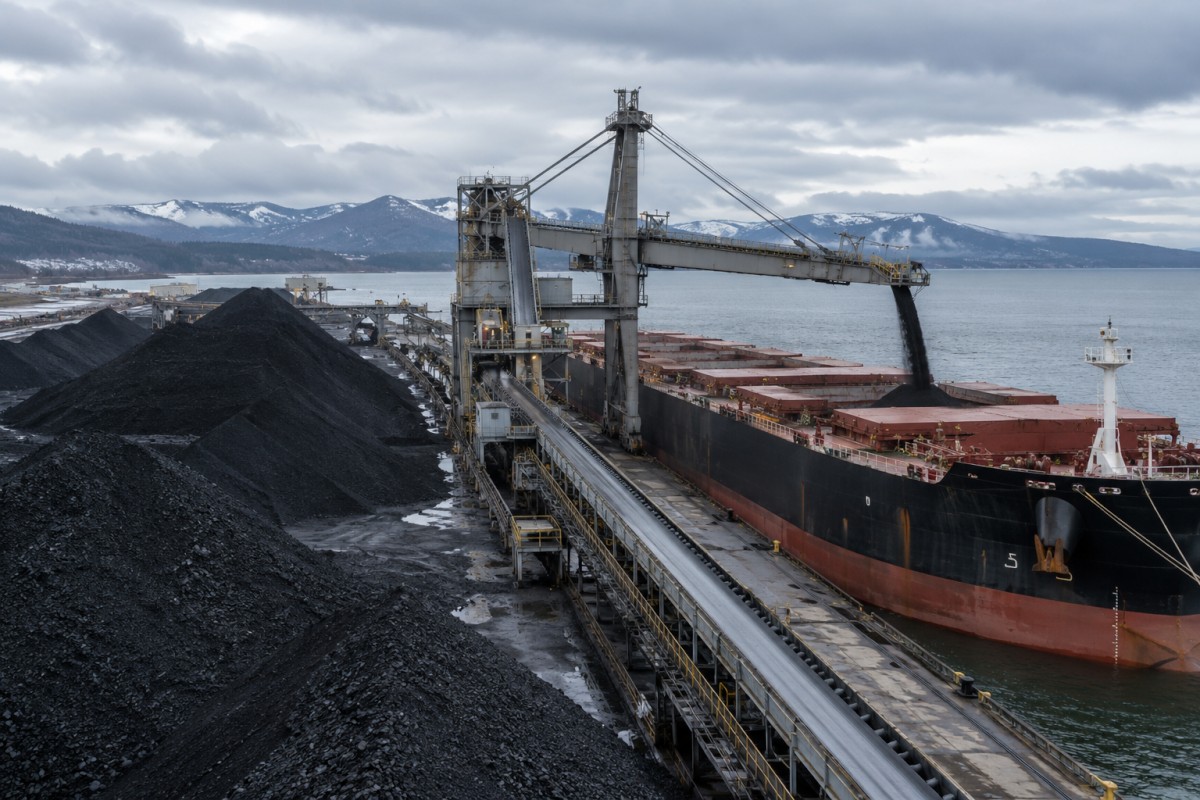
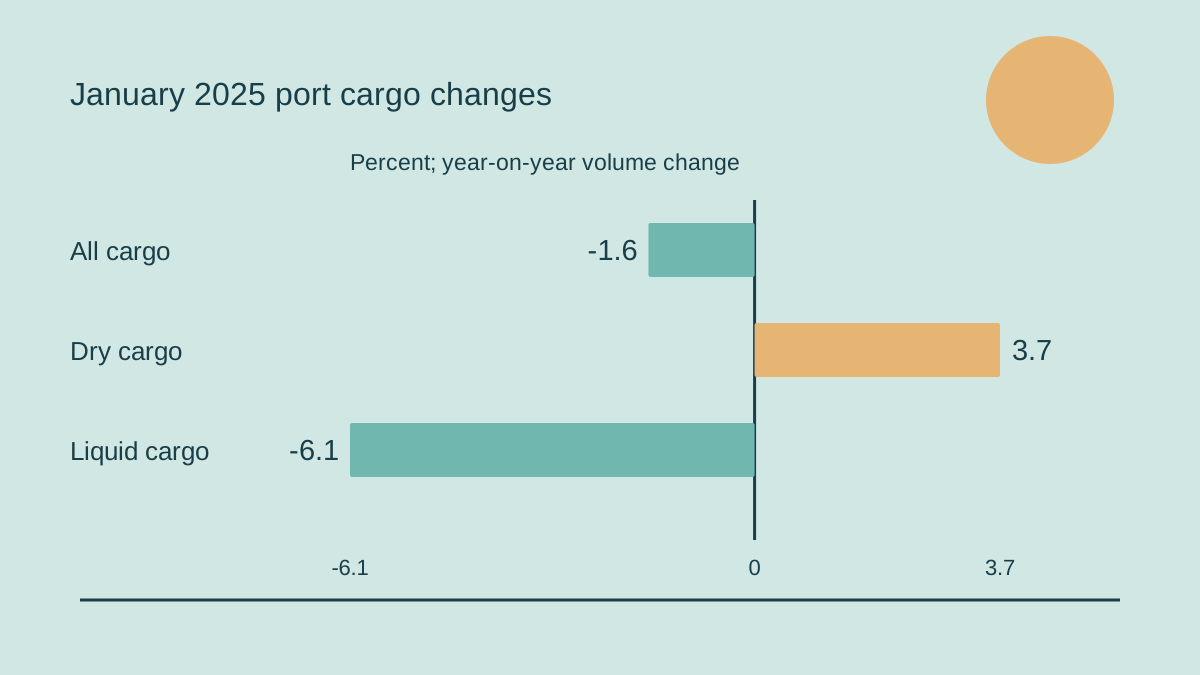
Seaports in Russia handled 71.6 million tonnes in January 2025, down 1.6% from January 2024, Interfax reported on 12 February, citing the Association of Commercial Seaports. Dry cargo increased 3.7% to 34.2 million tonnes, while liquid cargo fell 6.1% to 37.3 million tonnes.
Grain fell while other dry cargo increased
- Crude oil: 21.2 million tonnes, down 8.5%.
- Oil products: 11.6 million tonnes, down 5.1%.
Growth in the Baltic and Far East
The association’s dated regional breakdown reports Baltic-basin throughput of 23.6 million tonnes, up 1.9%, and Far Eastern throughput of 18.1 million tonnes, up 7.7%. The Azov-Black Sea basin declined 9.6% to 21.7 million tonnes, the Arctic basin fell 5.5% to 7.5 million tonnes, and the Caspian basin fell 20.9% to 0.7 million tonnes.
Among individual ports, Ust-Luga handled 11.0 million tonnes, up 3.0%; Novorossiysk handled 12.9 million tonnes, down 7.8%. Vladivostok increased 12.9% to 3.2 million tonnes. The national decline therefore combined gains and losses across different basins and ports.
The relative size of dry and liquid cargo
This is a rounding difference in published figures rather than a separately reported cargo category.