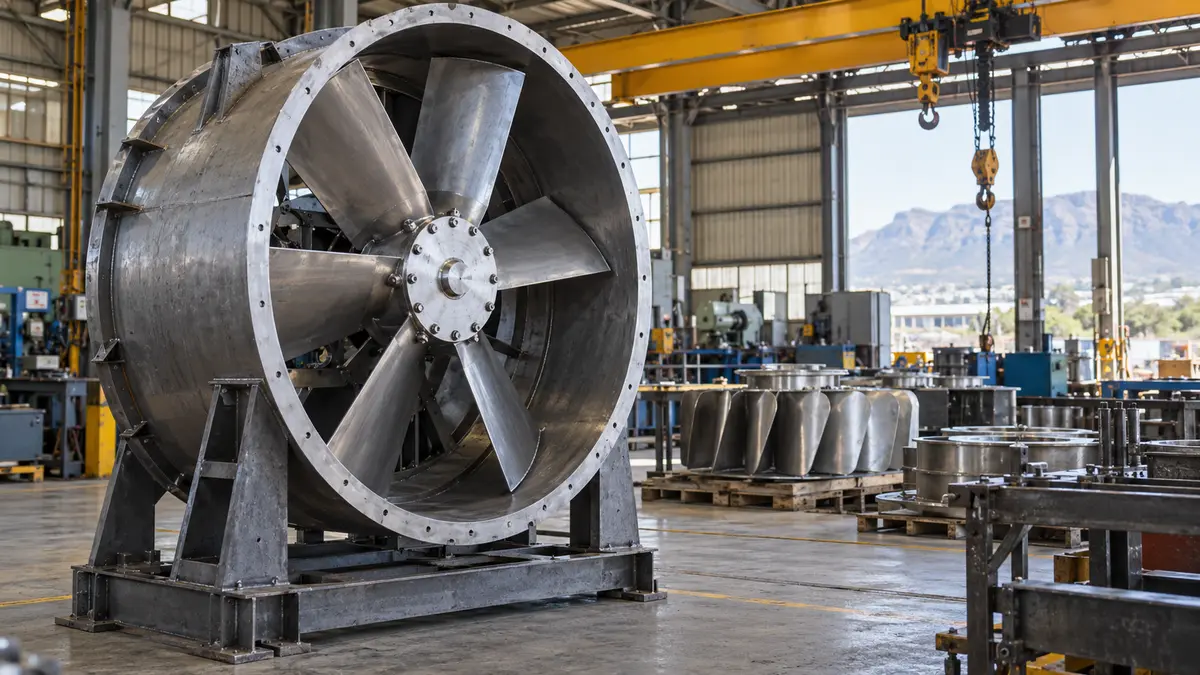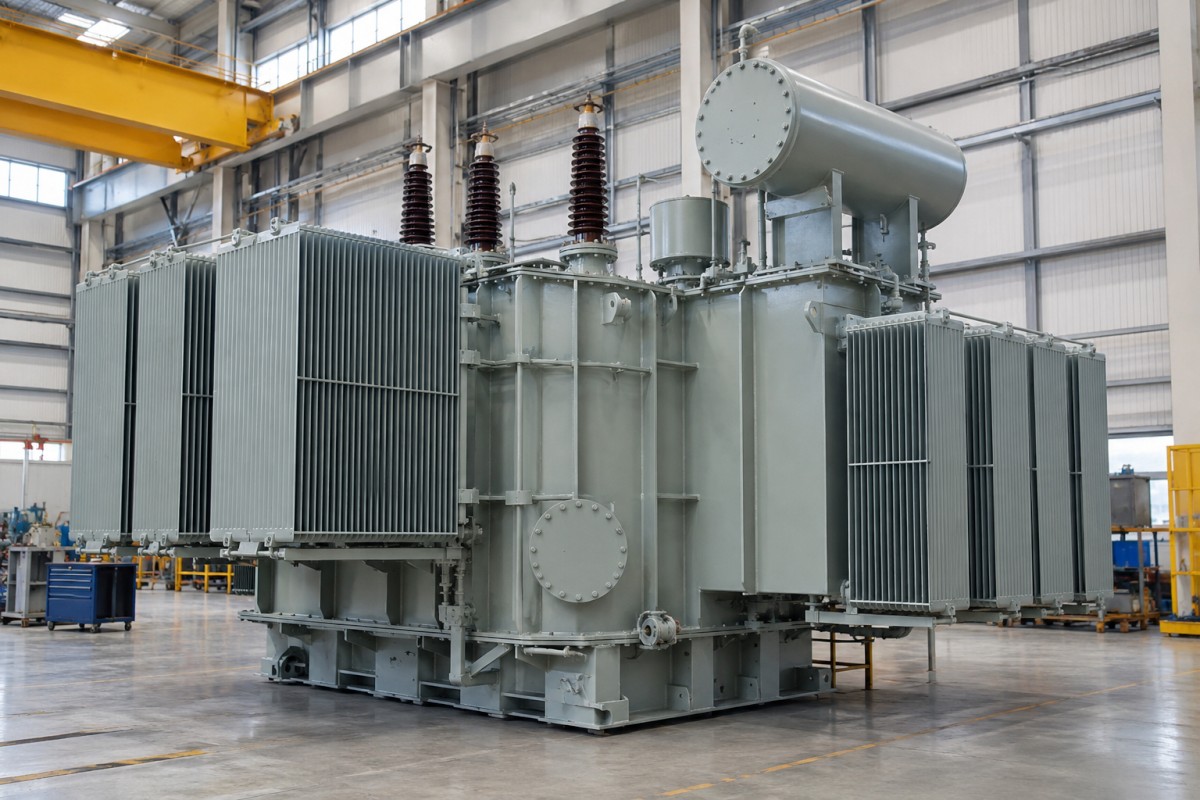
Siemens Energy plans a large power transformer factory in Charlotte, North Carolina, in the United States. Manufacturing Dive’s March 11, 2024 report describes new production alongside repair and refurbishment capability. The company’s February 14 announcement corroborates the factory plan. These are descriptions of intended capability, rather than measured output from an operating new factory.
The combination raises a useful capacity question: how should new manufacturing and repair be described when they represent different kinds of work? Counting items alone may conceal a changing workload. The analysis below uses an explicitly invented resource model to explain that problem. It makes no claim about Siemens Energy’s actual layout, staffing, equipment sharing or scheduling, and provides no engineering instructions for assessing, repairing or operating a transformer.
A completed item is not a common workload unit
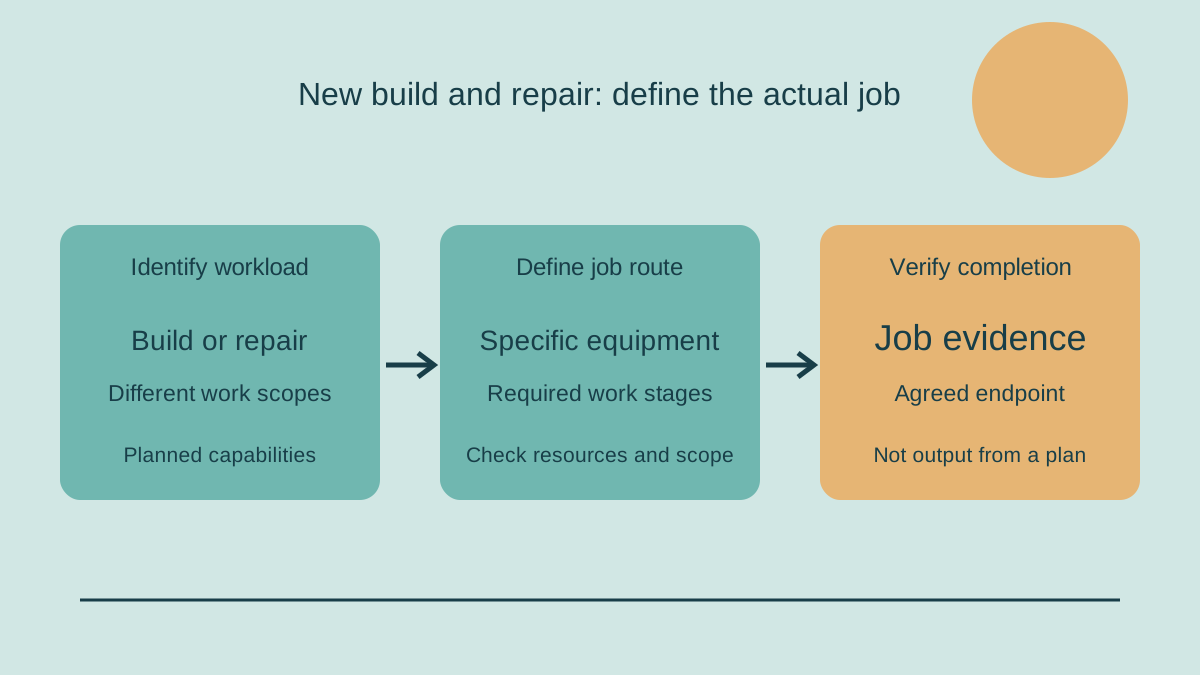
New manufacturing and repair can both produce a completed customer job, but that does not make the jobs interchangeable units of effort. A count of completed items answers how many items reached an identified end point. It does not explain which resources they required or what other work could have used those resources. A capacity discussion should therefore preserve the job class as well as the item count, instead of silently treating each completion as an equal share of factory work.
That distinction is an analytical starting point, not a claim about the time required for any particular transformer. A real comparison would need the relevant product and service definitions from the producer. The work associated with an existing item must not be inferred from a general announcement of repair capability. Likewise, an announced manufacturing capability does not establish the resource demand of every new product. The question is how the information would make these different commitments comparable within a stated planning scope.
For the factory plan, this creates a reason to ask for separate descriptions of the two work classes. A customer interested in a new unit and a customer interested in service may need different answers about what the offered capability includes. A combined headline can communicate the breadth of the plan, while separate workload descriptions explain its practical meaning. Those descriptions would add information to the announcement rather than contradict its intention.
A comparison needs a defined resource boundary
Two work classes become comparable for a resource question only after the resource is identified. A hypothetical factory model might distinguish resource group A from resource group B and express their available time in abstract hours. Those labels are deliberately generic. They do not identify actual machines, tests, labour skills or electrical procedures. The boundary allows the model to ask whether two proposed workload combinations fit the same stated time allowance.
The model should also state whether the resource groups are shared. Shared resources are a condition to be examined, not a fact established by the source report. If two activities use separate resources, one does not automatically displace the other. If a defined resource is shared, its allocation can connect the activities. A useful analysis preserves that conditional relationship rather than assuming that new production and repair must compete for the same space, people or equipment at this planned facility.
The boundary includes the period. Forty hours available in one observation window cannot be compared directly with a workload expressed over a different window. Nor should hours from unlike resource groups be treated as interchangeable without an explicit assumption. The model therefore retains a separate allowance for each group. This makes the comparison intelligible while leaving the actual factory’s resource definitions and operational decisions to the organisations with the necessary knowledge.
Workload mix can change while the item total stays still
An unchanged number of jobs can conceal a changed distribution of work. Suppose one period contains more new-build jobs and another contains more repair jobs. The total might be identical while the demand on a specified resource group differs. That possibility is enough to show why an item total needs a mix explanation. It is not evidence that a particular factory has experienced such a shift or that one class is always more demanding than the other.
The reverse is also possible within an abstract model: two different item totals could require similar amounts of a specified resource. A report that treats the larger total as automatically better utilised would omit the mix. The relevant question is what the jobs ask of the defined resource, not whether the count looks larger. A model can make that distinction without supplying an estimate of real production time or claiming that an observed workload translates directly into financial performance.
For a prospective customer, the distinction helps interpret a future capability statement. The availability of both manufacturing and service does not mean that their annual item counts can be added into one meaningful production measure. An addition may count completed jobs, but it does not establish a common workload or a common customer outcome. The report should identify what its total means and keep the separate classes visible when the question concerns resources.
An entirely invented two-resource comparison
Consider an illustrative window with forty abstract hours available in group A and thirty in group B. Assume a new-build job requires eight A hours and two B hours, while a repair job requires two A hours and six B hours. Every figure is invented for reasoning; none describes Siemens Energy, a customer transformer or an actual engineering process. The assumptions define two different workload profiles and two separate allowances, without claiming that a real factory would use such a model.
Under those assumptions, four new-build jobs and two repair jobs require thirty-six A hours and twenty B hours. Six jobs fit the stated allowances, leaving four A hours and ten B hours in the accounting model. Now compare two new-build jobs and four repair jobs. The total is still six jobs, but the requirements become twenty-four A hours and twenty-eight B hours. The remaining allowances are sixteen A hours and two B hours. An identical item count therefore produces a different resource picture.
- Keep the forty-hour A allowance separate from the thirty-hour B allowance.
- Identify the invented resource profile for each work class.
- Count four new jobs and two repair jobs as one stated mix, not as a universal capacity.
- Compare it with two new jobs and four repair jobs using the same assumptions.
- Preserve the different unused allowances rather than merging them into interchangeable time.
- Describe the result as a workload comparison, not a completed production schedule.
The calculation does not show that either mix is preferable. It does not represent sequencing, actual resource suitability or the conditions needed to complete a job. It simply demonstrates that six items can leave different amounts of room at different resource boundaries. Treating the remaining A and B hours as one freely usable total would add an assumption the example has not made. Its conclusion is about the meaning of the mix, not the feasibility of a real transformer order.
Unspecified repair scope remains an open input
A repair request is not necessarily a defined workload merely because an item has arrived for discussion. In an analytical record, the offered service scope and the resource estimate should be identifiable before the request is used as a fixed planning input. This is an information distinction. The article does not prescribe an inspection method, infer the condition of any equipment or state which findings would make a repair appropriate. Those are technical matters outside this capacity example.
An open scope can be represented as an open scope rather than assigned an invented average. If an estimate is used for discussion, the record should label it as an estimate and identify what would change its status. A confirmed description and a preliminary possibility are different planning inputs. Keeping them separate would allow a business conversation to explain its uncertainty without presenting an unknown repair requirement as if it were a measured task.
That distinction also affects the combined workload total. A list containing defined new-build jobs and service enquiries with unresolved scope is not a fully defined resource plan. It can still be useful as a list of potential commitments, provided its status is clear. The factory announcement gives a reason to consider the breadth of future work, but does not provide the details needed to turn every possible service request into a resource requirement.
Separate feasibility from a promised completion date
The invented comparison fits within two time allowances, but that does not establish a sequence or a delivery date. Aggregate time is not a schedule. Even within a simplified model, stating that the total resource demand stays below an allowance answers a different question from stating when each job would finish. The article therefore stops at the workload boundary. It does not recommend a scheduling method or claim that the available hours guarantee a customer commitment.
A useful customer conversation would distinguish these questions. The supplier could explain the defined scope of the job, the status of its resource consideration and the status of a proposed completion date. The actual answer would depend on information not contained in the announcement. This is why a planned factory’s capability should not be translated into an immediate service promise. A future description of the offering would need to connect the general capability with the particular request being discussed.
The distinction keeps the hypothetical remaining hours in proportion. Two unused B hours in one mix do not prove a delay; ten unused B hours in another do not prove a faster service. They describe the model’s unused allowance. Without the other information needed for sequencing and completion, there is no justified transition to a lead-time claim. A narrow calculation can clarify a question without answering every operational question that follows it.
A changed mix needs a changed explanation
If the mix changes, an explanation of resource demand should change with it. Reusing an earlier aggregate item count would hide the reason the workload picture has shifted. In the invented example, the two six-job combinations can be compared because their assumptions and allowances are identical. If either profile or allowance changed, the comparison would need that change stated. Otherwise, a reader could attribute a difference to the job mix when it actually came from the model’s revised inputs.
This is a reason to keep a concise reference to the model or estimate used for a planning statement. The reference should identify the work classes, the resource boundary and the period. It need not reveal every internal operational detail. Its role is to preserve the meaning of the comparison as the conversation moves between a broad capacity discussion and a specific customer question. The proposed record is an analytical tool, not a description of this company’s actual planning system.
A change explanation should also preserve unresolved inputs. If a service scope remains open, a revised mix should not silently convert it into a fixed job. The statement can instead describe a conditional scenario and explain which assumptions make it conditional. That would let participants discuss the possible workload while retaining the distinction between a potential service request and a defined commitment. The uncertainty belongs to the relevant input rather than being concealed inside a single total.
Capability breadth and customer benefit require different evidence
A facility offering manufacturing and repair could serve different kinds of customer needs. That is a reason to examine the plan, not a measured benefit. The source material does not establish the outcome of any particular future customer request. The analysis should therefore avoid claims that the combination will necessarily reduce lead times, lower costs, extend equipment life or resolve a wider supply problem. Such outcomes require evidence connected to an actual offering and task.
The breadth of capability can be described while those outcomes remain unproven. The useful follow-up questions concern what each work class includes, how its workload is explained and whether any relevant resources are shared. These questions make the combined plan easier to understand without demanding that both classes be expressed in the same unit. A clear distinction can be more informative than a large combined item total whose resource meaning remains undefined.
For the planned Charlotte factory, the strongest analytical conclusion is about the description needed to connect capability with workload. New manufacturing and repair should retain their own scope and status. Any comparison should identify its resources, period and assumptions. The invented six-job example illustrates why the mix matters; it does not predict the factory’s results. Keeping these boundaries visible allows the development plan to be discussed concretely while leaving future operating performance to actual evidence.